
Project record / Layout 02
CurbWaste
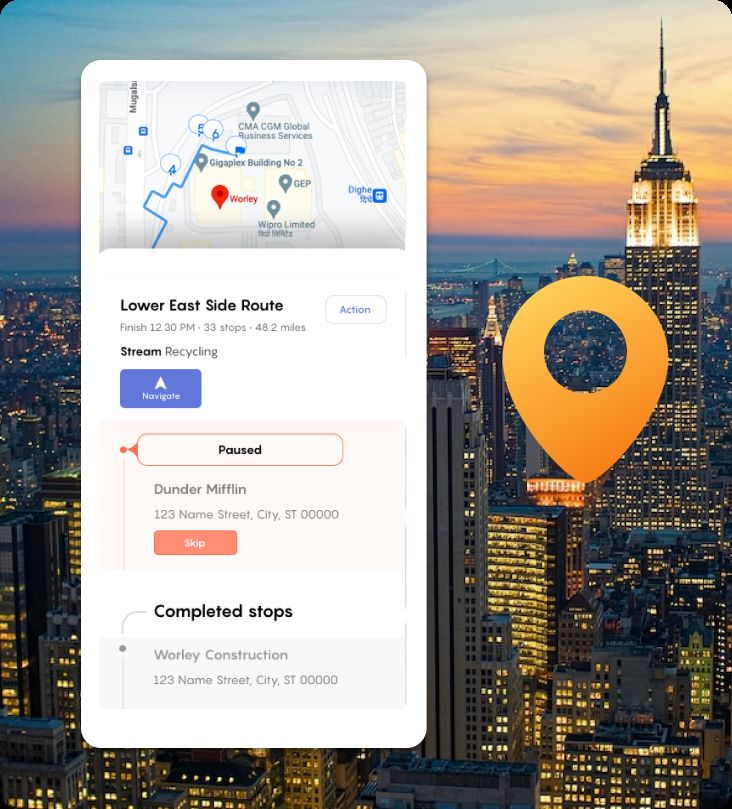
CurbWaste is cloud-based, data-driven software for waste haulers, designed around the operational needs of the waste-management ecosystem.
- Client
- Curbside Technologies
- Field
- Waste management
- Focus
- waste management software development
01 / Context
The product and the work around it.
CurbWaste is cloud-based, data-driven software for waste haulers, designed around the operational needs of the waste-management ecosystem.
The need
Waste hauling is a field operation with moving jobs, assets, and teams. The mobile product had to participate in a broader operational platform rather than act as an isolated utility.
Who it served
Waste haulers and the teams operating within the CurbWaste platform.
02 / Workflow
How the product moved the work.
The core path described by the retained project record.
- 01
Access field work
The mobile product brings platform activity into the operational environment.
- 02
Carry out hauling tasks
Users work with the information needed for day-to-day waste operations.
- 03
Return operational data
Field activity contributes to the platform’s data-driven view of the business.
03 / Delivery
What Outworld delivered.
The mobile experience is one surface of an operational system. Its value depends on fitting the work of haulers while returning useful data to the wider platform.
- 01Mobile app development
- 02Waste-operation workflows
- 03Cloud platform participation
- 04Field data capture
Constraints, decisions, and what changed.
Waste operations run on a daily cycle: routes, pickups, exceptions, and the records that justify an invoice. The people using the software are not at a desk, the rules vary by municipality, and the data has to be reconcilable at month end without a spreadsheet rebuild. Crews change shifts mid-route, so the record still has to attribute an event to the right day and the right vehicle.
- 01The daily record is the unit
Dispatch, route, and pickup events are modelled as one operational day, so an exception is attached to the day it happened rather than reconstructed later.
- 02Role-scoped views
Drivers, dispatchers, and finance see different slices of the same data instead of separate exports.
- 03Reconciliation in the product
Counts that finance depends on are visible inside the tool, which removes the manual export step at month end.
- 04Exceptions carry their reason
A missed pickup is recorded with the cause attached, so operations can fix the process instead of re-dispatching the same route every week.
- 05Finance signals live in the record
Completed, missed, billed, and contested are states of the same event rather than a separate monthly report.
What changed
The platform turned a paper-and-spreadsheet cycle into a single operational record that a hauler can run a day from and reconcile against at the end of the month. That record is also the audit trail: what was scheduled, what happened, who changed it, and which exception was accepted. Designing for reconciliation first is what makes the software usable by finance as well as by dispatch, and it is why the month-end export stopped being a separate project. The daily flow never asks the user to think about reconciliation; the record produces it. Operations and finance read the same source instead of negotiating a report at month end.
What the portfolio verifies.
The portfolio verifies mobile app development and describes the client platform as cloud-based and data-driven. It does not state Outworld’s web-platform scope, delivery dates, architecture, users, or outcomes.
This historical project is evidence of shipped product work. It is not presented as proof of Outworld’s current AI-agent delivery unless the record explicitly supports that claim.
How this work is sold now.
This is a historical project record. The service that covers this kind of work today is linked below, with the scope and prices published on it.
Have a system like this one? Skip the brief and pick a slot.
Book a 30-minute call04 / Related
More systems built around real work.
Continue through projects with a related user, workflow, or delivery surface.
Building something with similar complexity?
Bring us the workflow, the existing product, or the part no one wants to own.
Start a project Book a 30-minute call